
San Diego will punish your car wash and wax habits. Salt eats your trim while you sleep. UV breaks down your clear coat year-round. And the dust? It's already back.
Most people either overdo it (waxing every weekend like it's therapy) or completely neglect their paint until it looks chalky. Neither approach makes sense.
This car wash and wax guide breaks down what actually works, what's a waste of time, and how to keep your car looking good without turning maintenance into a part-time job. No fluff, just practical stuff that applies to how we actually drive in San Diego.
Table of Contents
- Washing and Waxing: What's Actually Happening
- How Often Should You Wash?
- How Often Should You Wax?
- Types of Wax (and When to Use Each)
- The Car Wash and Wax Order
- Drive-Through Car Washes: The Real Trade-Off
- Five Mistakes That Damage Your Paint
- San Diego-Specific Considerations
- DIY vs. Professional: Honest Take
- Quick Maintenance Routine (15 Minutes)
- Rather Skip the Work?
- FAQs
Washing and Waxing: What's Actually Happening
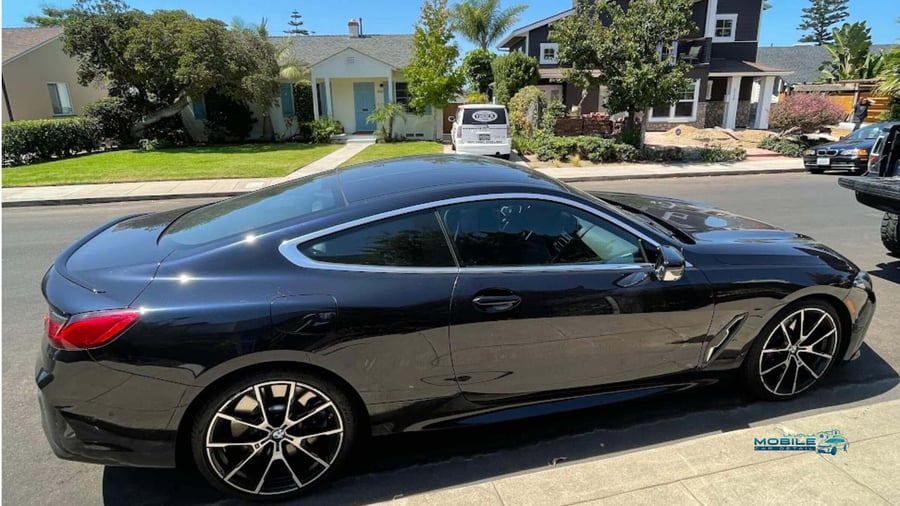 Black BMW 8 Series in a San Diego neighborhood showing mirror-like shine from The Bling package, includes hand car wash and wax.
These two get lumped together, but they do completely different things.
Washing removes dirt, dust, bird droppings, pollen, and whatever else landed on your car since Tuesday. It's light cleaning.
Waxing adds a protective layer on top of your paint. Think of it like sunscreen for your clear coat. It doesn't clean anything. It protects what's already clean.
The order matters more than people realize. Waxing over a dirty car seals contaminants against your paint. You're essentially locking in the grime and creating a sandpaper effect every time you wipe it down.
Another simple way to think about it: washing is like washing your hands. Waxing is like putting on lotion afterward. One removes stuff. The other protects.
How Often Should You Wash?
This depends on where you park and how much you drive. A blanket "once a week" recommendation ignores reality.
| Situation | How Often | |
|---|---|---|
| 🌊 | Coastal areas (La Jolla, Pacific Beach, Del Mar) | Every 1-2 weeks |
| 🏜️ | Inland areas (UTC, Mira Mesa, Poway) | Every 2-3 weeks |
| 🐦 | After bird droppings or tree sap | As soon as possible |
| 🏖️ | Post-beach trip with sand | Same day if you can |
| 🚗 | Garage-kept, light use | Every 3-4 weeks |
According to AAA, the average American spends nearly 300 hours per year in their car. That's basically seven full work weeks. The thing you spend that much time in deserves occasional attention.
Bird droppings are the sneaky one. They're acidic. Leave them for a few days in our sun and they can etch into the clear coat permanently. Keeping a quick detailer spray and microfiber cloth in your trunk handles this in 30 seconds.
How Often Should You Wax?
Traditional car wash and wax jobs last up to a couple months depending on conditions. San Diego's sun and salt air sit on the shorter end of that range.
The water bead test: Spray some water on your hood. If it beads up into tight droplets, your car wash and wax is still working. If it sheets flat or just sits there, time to reapply.
One myth worth killing: more wax doesn't mean more protection. Thick, gloppy layers don't absorb better. Thin, even coats do the job. Anything extra just sits on top and hazes up.
Types of Wax (and When to Use Each)
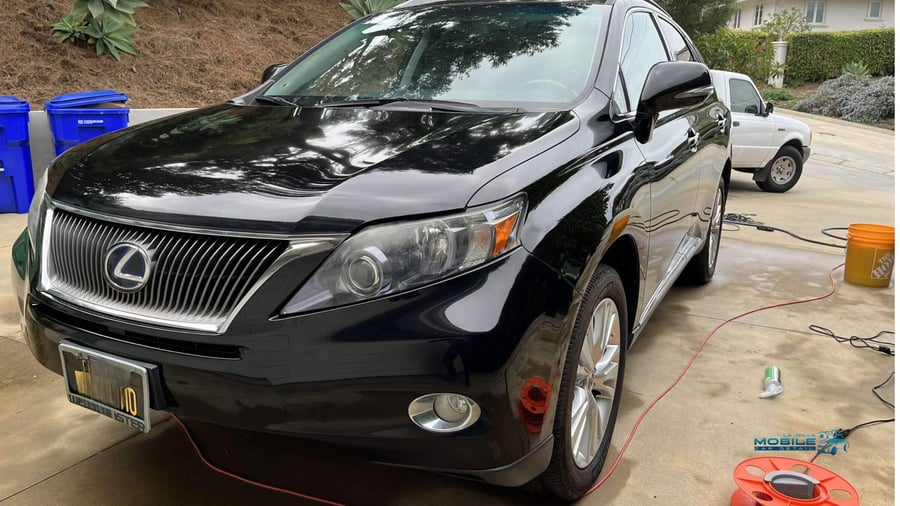 Black Lexus RX hybrid with a glossy, protected finish from The Bling package, which includes a hand car wash and wax.
Walk into an auto store and you'll see 47 different wax products with aggressive names and confusing claims. Here's what actually matters:
| Type | Lasts | Effort | Best For | |
|---|---|---|---|---|
| 🧴 | Paste Wax | 2-3 months | Moderate | Deep shine, enthusiasts who enjoy the process |
| 💧 | Liquid Wax | 1-2 months | Easy | Everyday drivers, good balance of effort and results |
| ✨ | Spray Wax | 1-2 weeks | Very easy | Quick touch-ups between full wax jobs |
| 🔬 | Synthetic Sealant | 3-5 months | Easy | Maximum durability, less warm glow |
| 🌿 | Carnauba (natural) | 3-6 weeks | Moderate | Warm, deep shine that looks expensive |
Carnauba vs. synthetic comes down to preference. Carnauba is the industry standard wax and gives that deep, warm glow. Synthetic sealants last longer but look slightly more "plastic" shine. Neither is wrong. Depends what you care about.
The Car Wash and Wax Order
When your car needs the full treatment, here's the sequence:
- Rinse first. Knock off loose dirt before anything touches the paint. Skipping this step means dragging particles across the surface.
- Wash top to bottom. Gravity is your friend. Dirt runs down, so start high.
- Dry completely. San Diego has hard water. Let it air dry and you'll have mineral spots everywhere. Microfiber towels or a quality chamois work best.
- Wax in thin layers. Apply to one section, let it haze, buff off. Move to the next. Less product, more even coverage.
If your paint feels rough even after washing (run your fingers across it, you'll know), you might need a clay bar treatment first. That pulls out embedded contaminants that washing alone can't remove. It's a deeper reset, and we cover that in our car cleaning guide.
Drive-Through Car Washes: The Real Trade-Off
Not every drive-through is terrible. But most aren't great for your paint either.
Here's what happens inside: brushes that cleaned the muddy truck before you now drag that grit across your hood. The water gets recycled. The soap is industrial-grade to save money, not protect finishes.
According to the International Carwash Association, over 2 billion car washes happen annually in the U.S. The majority use friction-based systems. Those micro-scratches you see in direct sunlight? They add up wash after wash.
When a drive-through is fine:
- ✅ Touchless systems (high-pressure water, no brushes)
- ✅ Quick rinse after a coastal drive to remove salt
- ✅ Older car you're not precious about
When to skip it:
- ❌ Dark paint (swirls show easily)
- ❌ New car or recently detailed vehicle
- ❌ Right after the beach (sand + spinning brushes = scratches)
Touchless washes are the exception. No contact means no scratching. The trade-off is they're less effective on stuck-on grime, but for regular maintenance, they're a reasonable option.
Five Mistakes That Damage Your Paint
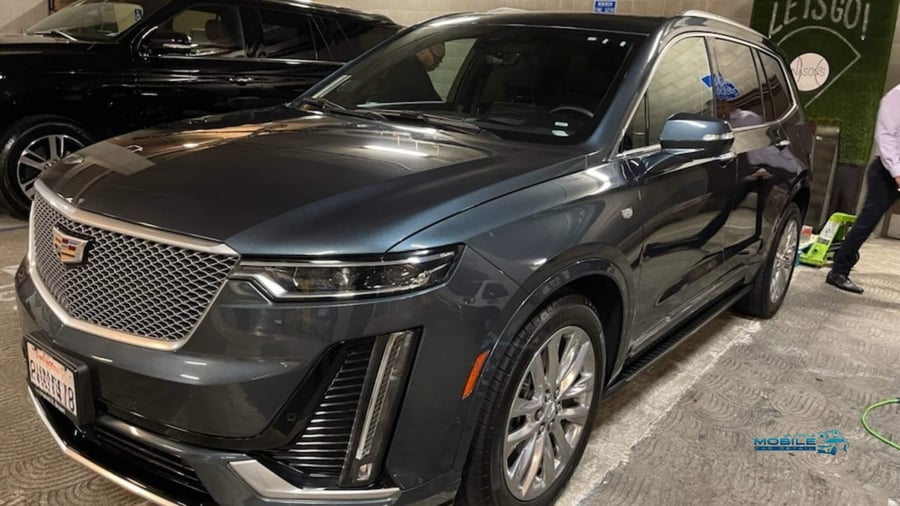 Dark gray Cadillac XT6 with a glossy finish from The Bling package, which includes a hand car wash and wax.
Most paint damage comes from good intentions executed badly.
1. Washing in direct sunlight.
The soap dries before you can rinse it. Now you've got streaks baked onto the surface. Early morning or late afternoon works better.
2. Using dish soap.
Dawn is great for dishes. Terrible for cars. It strips wax, dries out rubber seals, and leaves the paint unprotected. Car wash soap exists for a reason.
3. Dirty wash mitt or sponge.
That sponge from last month? Full of trapped grit. Every swipe drags particles across your paint. Rinse your mitt constantly or use the two-bucket method.
4. Air drying.
Looks harmless. But San Diego's water is hard. Evaporation leaves mineral deposits that etch into clear coat over time. Those white spots on older cars around Pacific Beach? Often just years of air drying.
5. Waxing over dirt.
Already mentioned, but worth repeating. Wax locks everything underneath. Clean first. Always.
San Diego-Specific Considerations
Living here is great. For cars? It's complicated.
🌊 Salt air. If you're within five miles of the coast, salt particles accumulate on your paint faster than you'd expect. You might not see it, but it's there, slowly working on your trim and undercarriage. Neighborhoods like La Jolla, Del Mar, and Point Loma get hit hardest. Regular rinsing helps. Even just hosing down the car once a week makes a difference.
☀️ UV exposure. San Diego averages 266 sunny days per year according to U.S. Climate Data. Great for beach days. Brutal for clear coats. Wax provides a buffer against UV damage. Without it, your paint oxidizes faster, and that's how you end up with the faded, chalky look.
🌸 Pollen season. February through May, that yellow dust covers everything. It's not just annoying. Pollen is mildly acidic and can etch paint if left sitting, especially when it gets wet and bakes in the sun.
DIY vs. Professional: Honest Take
Both approaches work. The real question is which one you'll actually follow through on.
DIY makes sense if:
- You enjoy the process (some people find washing their car relaxing)
- Your car just needs maintenance, not restoration
- You have shade and proper supplies
- You're not chasing perfection, just cleanliness
Professional makes sense if:
- You'd rather spend Saturday doing literally anything else
- Your car needs more than a wash (clay bar, polish, paint correction). See our complete detailing guide for what that involves.
- You want it done right without investing in equipment
- Time is more valuable than money right now
Quick Maintenance Routine (15 Minutes)
Between full washes, this keeps things presentable:
- 🧽 Spray waterless wash or quick detailer on a few panels at a time
- 🧴 Wipe gently with a clean microfiber towel (fold it, use clean sides)
- ✨ Hit high-touch areas: door handles, mirrors, front grille
- 🪟 Quick wipe on windows inside and out
This isn't a replacement for a real wash. But it extends the time between full washes and keeps your car looking decent for that Sunday drive to Torrey Pines or tailgate at Petco Park.
Rather Skip the Work?
If you'd rather spend your weekend doing something else, we get it. Have a mobile detailer come to you with their own water and power.
FAQs
Does a car wash and wax prevent scratches?
Not really. Wax protects against UV, water spots, and light contamination. It adds a sacrificial layer, but it won't stop a shopping cart or a key. For actual scratch resistance, you'd need ceramic coating or paint protection film (PPF).
Can I wax a brand new car?
Yes. Factory paint is fully cured when you drive it off the lot. Waxing a new car protects that finish from day one. No waiting period needed.
How long does wax actually last?
Traditional carnauba: 3-6 weeks. Synthetic sealants: 4-6 months. Variables include sun exposure, how often you wash, and whether you park in a garage. San Diego conditions lean toward the shorter end.
Is ceramic coating better than wax?
Different tools. Ceramic coating bonds to your paint, lasts 3-5 years, and offers stronger protection. But it costs significantly more and requires professional application for best results. Wax is affordable, easy to apply yourself, and works fine for most people. We break this down fully in our ceramic coating guide.
What's the best time of day for a car wash and wax?
Early morning or late afternoon especially in San Diego. You want shade or indirect light. Midday sun dries soap before you can rinse it, leaving spots and streaks.
Should I wax my car before or after it rains?
Before, if possible. And hand car wash and wax helps water bead and run off, which means less spotting. Waxing right after rain works too, just make sure the car is completely dry first.