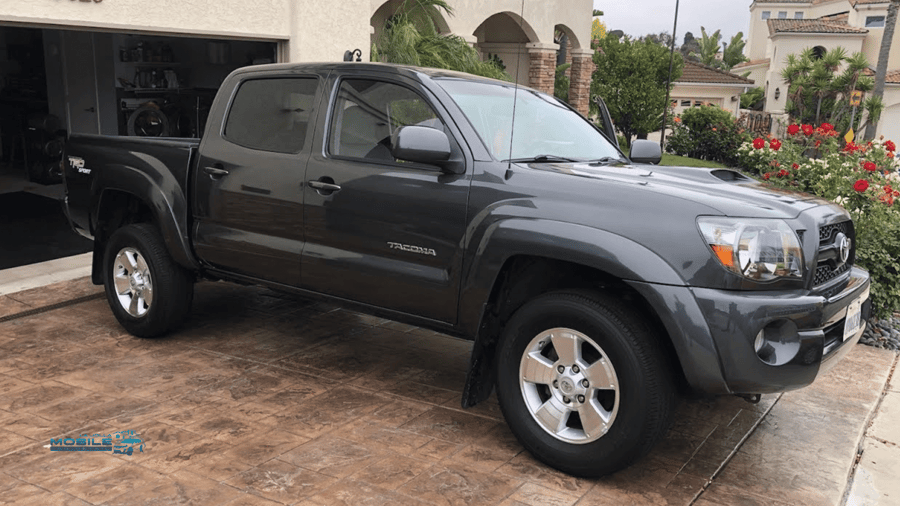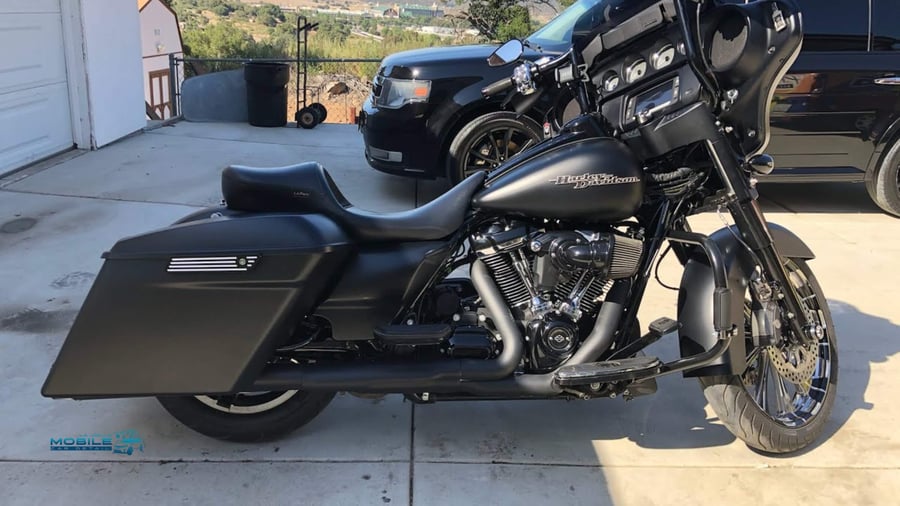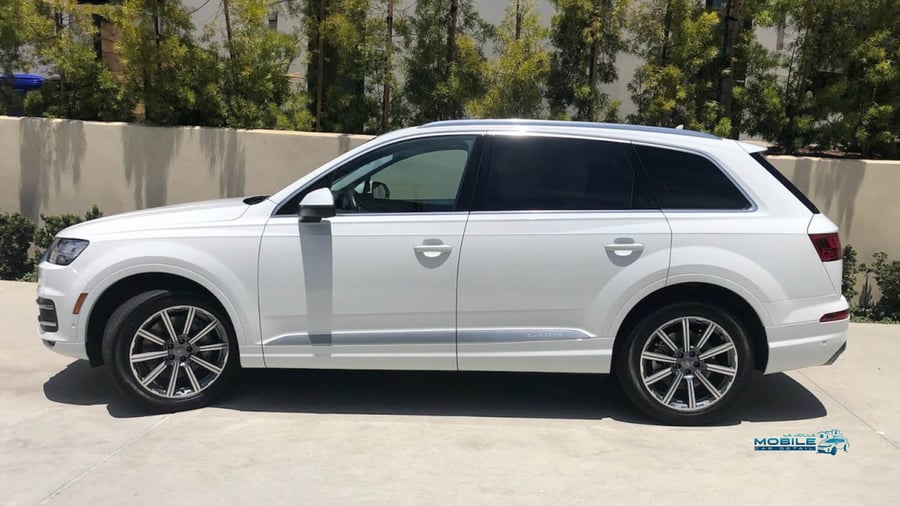

This car cleaning guide will save you from making the same expensive mistakes most San Diego drivers make without even realizing it.
You know that moment when you finish washing your car, step back to admire your work, and the sun hits it just right to reveal a thousand tiny swirl marks you swear weren't there before? Or when sand from that beach trip six months ago is somehow still living rent-free in your carpet?
Most of us are accidentally damaging our cars every time we try to clean them. And in San Diego, where salt air, intense sun, and hard water team up like a villain squad, proper car care protects the second most expensive thing you own. This breaks down professional detailing techniques into steps you can actually understand and use—from why the two-bucket method matters to what ceramic coating actually does. No confusing jargon, no sales pitch. Just straight talk that helps you make informed decisions about your vehicle.
Table of Contents
Why Trust This Guide?
We've coordinated thousands of details across San Diego through our network of certified detailers. Every professional in our network has 5+ years of hands-on experience, is fully registered and insured, and maintains a 4.7 out of 5 star rating or higher for every booking.
Our client base includes everyone from busy parents in La Jolla to businesses whose reputation depends on making a clean impression. Many clients have stayed with us for years because they know what to expect: consistent, professional results from people who actually know what they're doing. Our Google reviews reflect that consistency, and our business clients trust us with their fleet vehicles because we understand that a clean car isn't just about appearance. It's about the impression you make.
This guide comes from real experience detailing everything from daily drivers to luxury vehicles across every neighborhood in San Diego. The techniques we're sharing aren't theory. They're what actually works in our coastal climate, tested on hundreds of cars every month.
Exterior Car Cleaning: Beyond the Surface
 A pristine white Range Rover Sport after a professional car cleaning in San Diego
 Washing your car sounds simple until you realize most people are creating microscopic scratches every time they do it.
Those swirl marks you see in direct sunlight? They're from washing technique, not age. And once you know what causes them, you'll never wash your car the same way again.
The Two-Bucket Method
One bucket holds soapy water. The other holds clean rinse water.
Here's why this matters: when you wash a panel and go back to the soap bucket, you're depositing dirt into that bucket. Next time you dip your mitt, you're picking up that dirt and dragging it across your paint. The rinse bucket solves this. You clean your mitt in the rinse water first, then go back to the soap bucket for clean suds.
Think of it like mopping a floor. You wouldn't dip your mop back into clean water after soaking up dirt, right? Same concept. Professional mobile car cleaning in San Diego always uses this method because it's the difference between cleaning your car and damaging it.
Wheel and Tire Care
Your tires are your car's shoes, and just like you wouldn't wear white sneakers through mud and expect them to stay clean, your wheels need regular attention.
Brake dust is acidic. If you let it sit on your wheels, it bonds to the finish and becomes nearly impossible to remove without damaging the wheel. This is especially true in San Diego where we drive in stop and go traffic that generates more brake dust than highway cruising.
Think of brake dust like gum on a sidewalk. Fresh? Easy to remove. Left for weeks? Now you need a chisel.
Use a pH neutral wheel cleaner, not household cleaners or dish soap. Those strip protective coatings and can cause corrosion over time. It's like using bleach on leather shoes because you thought it would get them cleaner. A dedicated wheel brush gets into the barrel (the part you can't see) where most of the gunk hides, kind of like how you need that special brush to clean the bottom of a blender.
Decontamination: The Secret Sauce
Your paint feels rough even after washing? That's bonded contamination. Tiny particles of rail dust, industrial fallout, and tar that soap can't remove.
Here's an everyday comparison: ever notice how your shower glass feels rough even after you've cleaned it? That's hard water mineral deposits that regular soap can't touch. You need a specific product to break down those minerals.
Same thing with your car's paint, except instead of minerals, it's metallic particles and environmental gunk that's chemically bonded to the surface.
In urban San Diego, especially near Pacific Beach or downtown, this builds up faster than you'd think. Every time you park under construction or drive past brake dust from other cars, those particles are settling on your paint and sticking there like they signed a lease.
Chemical Decontamination vs. The Clay Bar
Chemical decontamination uses iron removers that dissolve metallic particles bonded to your paint. You spray it on, wait a few minutes, and watch it turn purple as it reacts with iron. Then you rinse. It's effective but doesn't get everything.
A clay bar physically pulls contaminants out of your paint. You spray a lubricant on a clean panel, then glide the clay bar across the surface. It grabs everything the chemical couldn't touch: tree sap, overspray, tar spots.
Run your hand over the paint before and after, and you'll feel the difference immediately. It goes from rough sandpaper to smooth glass.
Most professional details use both methods because they work on different types of contamination.
Advanced Paint Protection and Restoration
Once your paint is truly clean, you can see what condition it's actually in. According to Kelley Blue Book research, proper paint maintenance can preserve up to 15% more resale value compared to neglected vehicles.
Most cars in San Diego have some level of clear coat damage from years of improper washing or sitting in the sun.
Paint Correction Explained
Paint correction uses a machine polisher to gently remove a microscopic layer of clear coat, leveling the surface so scratches disappear. Think of it like sanding wood. You're removing imperfections to create a flat, smooth finish.
The difference is you're working with microns of clear coat, so precision matters.
You only have so much clear coat before you hit the base paint. That's why working with someone experienced in fixing sun damaged car paint is important. They know how much correction your paint can handle.
Wax, Sealants, and Ceramic Coating in San Diego
Once your paint is corrected, you need protection. San Diego's sun, salt air, and hard water are constantly attacking your clear coat. Here's what each protection option actually does:
| Protection Type | Longevity | Best For | Maintenance |
|---|---|---|---|
| Carnauba Wax | 4-6 weeks | Weekend enthusiasts who enjoy the application process | Reapply monthly |
| Synthetic Sealant | 3-4 months | Daily drivers wanting low maintenance | Reapply quarterly |
| Ceramic Coating | 2-5 years | Coastal residents and long-term ownership | Annual inspection only |
Wax gives a warm, deep shine but breaks down quickly in San Diego heat. It's like applying sunscreen that washes off after one swim. Good for car enthusiasts who enjoy the ritual, but you're reapplying monthly.
Sealants are synthetic polymers that bond to paint better than wax. They last longer and handle our climate without constant reapplication. The shine is more reflective than warm, but most people can't tell the difference unless they're looking at two cars side by side.
Ceramic Coating is the gold standard for coastal San Diego. A proper ceramic coating creates a chemical bond with your clear coat and lasts years depending on quality.
It's hydrophobic, meaning water beads off like oil on a nonstick pan. It resists bird droppings, which are acidic and etch paint. It blocks UV rays and makes washing easier because dirt doesn't stick as well.
The investment is higher upfront, but if you're keeping your car long term and live within five miles of the coast, it pays for itself in reduced maintenance and paint preservation.
Interior Detailing: Creating a Healthy Cabin
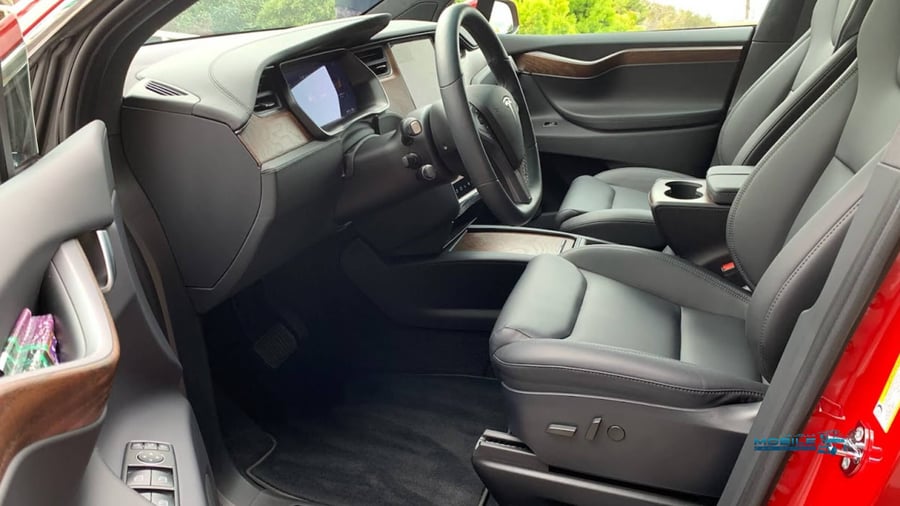 The deep-cleaned interior of a red Tesla after getting a profesional car clean in San Diego
You spend nearly 300 hours a year in your car according to the AAA Foundation for Traffic Safety. That's seven full work weeks breathing whatever's trapped in your upholstery and carpet!
Deep Cleaning vs. Surface Wiping
Surface wiping with store bought sprays just moves dust around. You might see clean surfaces, but you're not removing anything.
Professional interior detailing uses commercial grade vacuums with serious suction power and specialized attachments. Picture the difference between using a broom on your carpet versus a real vacuum. That's the gap between your home vacuum and professional equipment.
These systems pull out the sand that's been ground into your floor mats, the Cheerios your kid dropped six months ago that somehow migrated under the seat, and the pet hair that's woven itself into the fabric like it's part of the original upholstery.
Compressed air blows debris out of vents, crevices, and seat tracks where regular vacuums can't reach. San Diego dust and coastal allergens get trapped in fabric and circulate every time you turn on the AC, like having a dusty fan that just spreads the problem around instead of solving it.
Steam Cleaning and Extraction
Steam cleaning uses high temperature vapor to break down grime, kill bacteria, and lift stains without soaking your interior. It's especially effective on fabric seats and floor mats where sand (which is basically tiny rocks) gets ground into fibers.
Hot water extraction goes deeper. It injects heated cleaning solution into carpet and upholstery, then immediately extracts it along with dissolved dirt. You're actually pulling out what's embedded, not just cleaning the surface.
The difference in smell is immediate, and your car dries in a few hours rather than days.
Caring for Leather, Alcantara, and Modern Synthetics
Leather in San Diego heat dries out and cracks without proper conditioning. Those greasy wipes at the auto parts store make it shiny for a day, then accelerate drying. Real leather care uses pH balanced cleaners followed by conditioners that penetrate the hide and restore moisture.
UV protection is the most important step. San Diego sun breaks down leather faster than anything else. A good leather conditioner contains UV inhibitors that act like sunscreen for your seats, preventing the fading and cracking you see on older cars around Del Mar or Encinitas.
Alcantara (that suede like material in higher end cars) requires different care. It needs brushing to maintain the nap and specialized cleaners that don't mat the fibers.
Modern synthetic leather is more forgiving but still benefits from UV protection to prevent dashboard cracking, which is common in cars parked outside in Southern California.
| Material | Main Enemy | Care Frequency | Key Product |
|---|---|---|---|
| Leather | UV rays and heat | Every 3 months | Conditioner with UV protection |
| Alcantara | Oils and moisture | As needed | Specialized brush and cleaner |
| Synthetic Leather | UV degradation | Every 6 months | UV protectant spray |
| Fabric | Embedded dirt and allergens | Annually | Hot water extraction |
Why Mobile Car Cleaning is the Standard in San Diego
Mobile detailing has evolved from "guy with a bucket" to full professional setups that bring shop quality results to your driveway.
The convenience factor is obvious. You don't lose half your Saturday driving to a shop and waiting. But there are real technical advantages too.
The Convenience Factor
Professional mobile car cleaning means the detailer brings water, power, equipment, and commercial grade products to your location in Torrey Pines, Point Loma, or anywhere across the county.
You schedule around your life, not their shop hours. Your car gets detailed while you're working from home, and you walk out to a finished result without losing any productive time. It's like having food delivered instead of driving to pick it up, except your car is the one getting the service while you stay productive.
Eco-Friendly Practices
Here's something that surprises most people: according to the International Carwash Association, drive through car washes use 100 to 150 gallons of water per car. Professional mobile detailers use 20 to 30 gallons total.
Mobile detailers use water reclamation systems that capture and filter used water, so soap and contaminants don't flow into storm drains and end up in the Pacific. They use biodegradable, phosphate free products that break down naturally.
We live on the coast. What goes down the drain literally ends up in the ocean we swim in.
The Value of Expertise
A professional detailer sees things you don't. They measure paint thickness before correction to know how much clear coat they can safely remove. They spot leather dehydration before cracking starts. They notice failing window seals that will leak during winter rains.
Fixing problems early is always cheaper than waiting until damage is visible. That small water spot you ignored? Left long enough, it etches into the clear coat permanently.
The leather that feels "a little dry"? Six months later it's cracked and requires reupholstery.
Maintenance Tips: Keeping the "Just Detailed" Look
You don't need to detail your car weekly, but small consistent habits extend how long your car looks good between professional services.
The 15 Minute Weekly Routine
| Task | Why It Matters |
|---|---|
| Wipe down interior surfaces (3 min) | Dashboard, center console, door panels. Stops dust before it builds up |
| Shake out and vacuum floor mats (4 min) | Removes sand and debris before it grinds into carpet |
| Clean all windows (5 min) | Inside and out. Dirty windows make the whole car look neglected |
| Remove bird droppings (1 min) | They're acidic and etch paint if left in the sun |
| Quick exterior rinse (2 min) | After rain or beach trips. Removes salt and surface dirt before it bonds |
| TOTAL: | 15 minutes |
Doing these five things weekly means your car stays presentable and you're not scheduling emergency details before important meetings or events.
When to Call a Professional
Some issues need more than a basic wash. Water beading has stopped, meaning your protection layer is gone. Paint feels rough to the touch even after washing, which indicates bonded contamination that needs clay bar treatment.
Visible swirl marks or scratches in direct sunlight require paint correction.
Interior smells that won't go away with normal cleaning need extraction to remove what's embedded in fabric. Leather that feels stiff or shows signs of cracking needs professional conditioning and restoration.
If you're seeing these signs, home cleaning won't fix them. You're just maintaining the problem. Check out our pricing packages to see which service level addresses your specific needs.
The Science of Prevention
Car cleaning prevents expensive damage through consistent, proper maintenance. Clear coat failure from UV exposure costs thousands to repaint. Interior that smells from embedded moisture can develop mold. Wheels that corrode from brake dust require replacement, not refinishing.
The goal is simple: use car cleaning to keep your car in condition where minor maintenance prevents major repairs. Think of it like going to the dentist for regular cleanings instead of waiting until you need a root canal. Prevention is way cheaper and way less painful than repair.
A well maintained car holds its trade in value for years in the competitive Southern California market. When you're ready to sell or trade, the difference between a car that's been properly detailed and one that's been neglected can be thousands of dollars.
Your car is an investment. Treat it like one.
FAQs
How often should I get my car professionally cleaned in San Diego?
For most drivers, a full detail every 4 to 6 months maintains your vehicle properly. If you live near the coast, have kids or pets, or park outside daily, consider quarterly services to combat salt air and UV damage.
What's the difference between car washing and car detailing?
Car washing removes surface dirt. Detailing involves decontamination, paint correction, protection application, and deep interior cleaning. Washing is maintenance. Detailing is restoration and preservation.
Is ceramic coating worth the cost in San Diego?
If you plan to keep your car for 3+ years and live within 10 miles of the coast, yes. Ceramic coating provides 2 to 5 years of protection against salt air, UV rays, and bird droppings, reducing long term maintenance costs and preserving resale value.
Can I damage my car by washing it incorrectly?
Yes. Single bucket washing, dirty towels, or washing in direct sunlight causes swirl marks and water spots. Using dish soap strips protective wax. These mistakes accumulate over time, requiring paint correction to fix.
How do mobile detailers handle water in drought conscious California?
Professional mobile detailers use 20 to 30 gallons per detail compared to 100 to 150 gallons at drive through car washes. They use water reclamation systems that comply with California environmental standards.
What causes that rough feeling on car paint after washing?
Bonded contamination. Iron particles from brake dust, industrial fallout, tree sap, or tar. These require chemical decontamination or clay bar treatment to remove. Regular soap and water can't touch them.
How long does a professional car cleaning take?
Basic details take 1.5 to 2 hours. Full paint correction and ceramic coating can take 6 to 8 hours depending on vehicle size and condition. Most mobile services complete work while you're home or at the office.