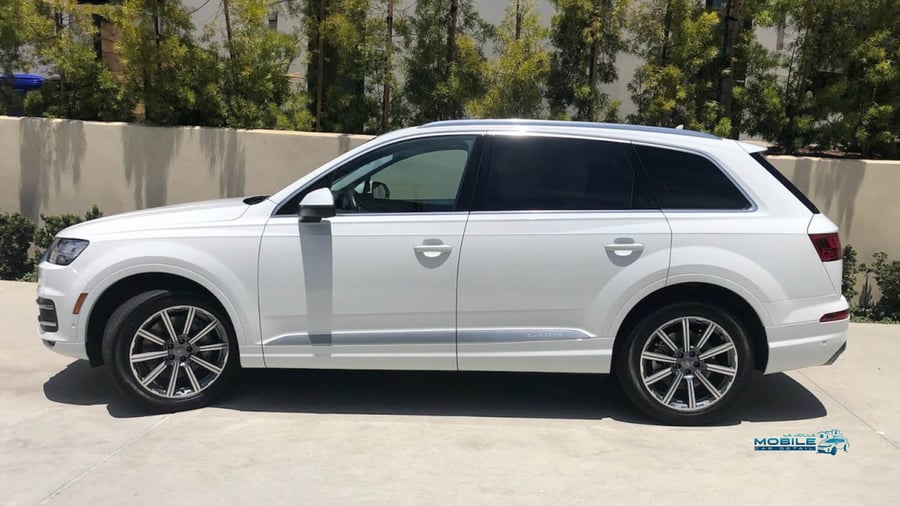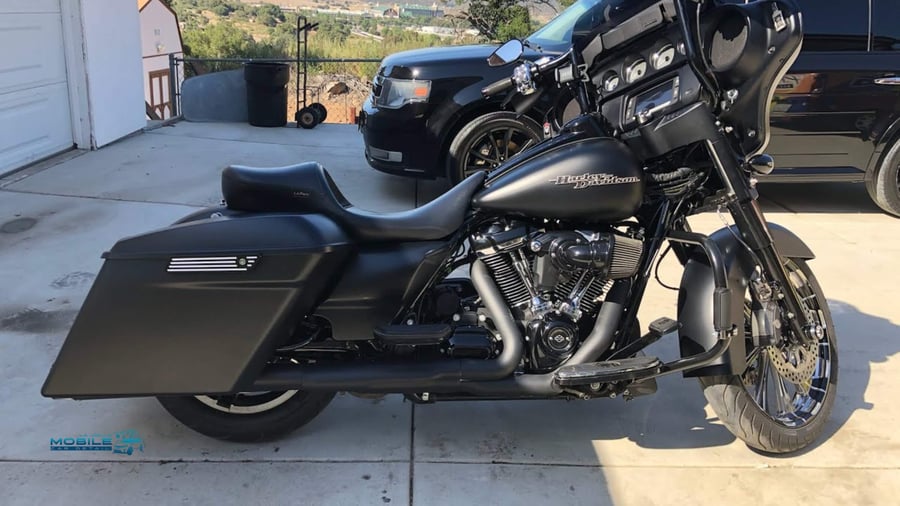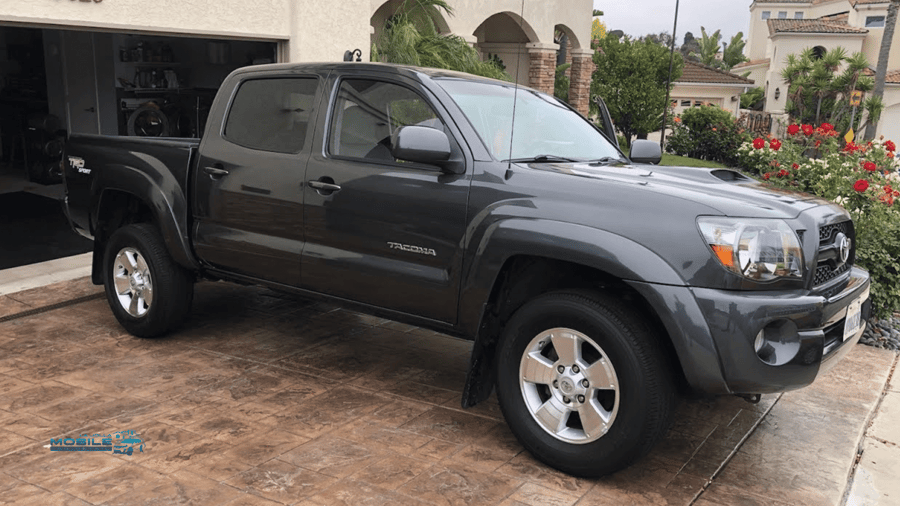

This truck detailing guide is for San Diego truck owners who know their vehicle is more than just transportation.
You're the person who spent 45 minutes at Comic-Con trying to find parking big enough for your F-150. You've parallel parked a Tacoma in La Jolla more times than you can count. You haul camping gear to East County on weekends, and your truck bed has seen everything from Home Depot runs to beach trips where half the sand ended up in your floor mats.
Trucks aren't cars. They work harder, get dirtier, and face challenges sedans never see. This guide breaks down professional truck detailing techniques without the fluff, from cleaning spray-in bed liners to understanding why the Toyota Tacoma holds 73.7% of its value after five years while other trucks lose nearly half.
Table of Contents
- Why Trust This Guide?
- Why Car Washes Neglect Your Truck
- San Diego's Coastal Climate and Your Truck
- Specialized Exterior Care for Modern Trucks
- Caring for Bed Liners vs. Painted Beds
- Removing Road Salt and Brake Dust
- The Oversize Challenge: Washing Tall Trucks
- Interior Detailing: Built for Ruggedness, Cleaned for Comfort
- The Sand Struggle: San Diego's Permanent Souvenir
- Treating Work-Stained Fabric and Stiff Leather
- Odor Elimination: Why Air Fresheners Fail
- The Economics of Truck Ownership: Resale Value
- The Toyota Tacoma Effect
- Retained Value After 5 Years: Top Trucks
- Where Proper Detailing Pays Off
- Why Professional Mobile Truck Detailing Works in San Diego
- Truck Detailing vs. At-Home Washing: How Much Water Is Really Used?
- Cermatic Coating: UV Protection for Trucks
- Your Truck Is an Asset, Not Just a Tool
- FAQs
Why Trust This Guide?
We've coordinated thousands of truck detailing appointments across San Diego. Every professional detailer in our network has 5+ years hands-on experience, full registration and insurance, and maintains a 4.7 out of 5 star rating minimum for every booking. They know trucks because they work on them every day.
Clients include contractors whose trucks are mobile offices, businesses that rely on clean fleets for professional impressions, weekend warriors prepping for Baja trips, and families who need the third row actually usable. Many clients stay with us for years because consistent results matter.
According to Simply Insurance data, the average American drives 14,300 miles per year. Truck owners often put on significantly more, especially in Southern California where your truck is your daily driver, weekend adventure vehicle, and Home Depot hauler all in one.
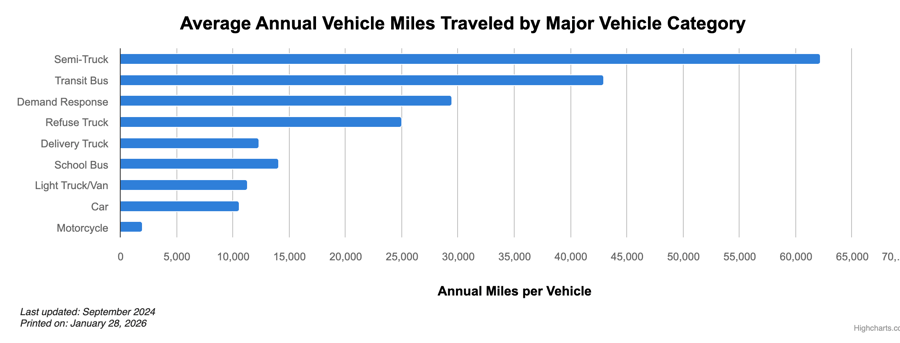
Source image available at: https://afdc.energy.gov/data/10309 (Alternative Fuels Data Center - Average Annual Vehicle Miles Traveled by Major Vehicle Category)
This guide comes from real experience with thousands of truck detailing stories, from stock Silverados to modified Tacos across every San Diego neighborhood. These aren't theoretical techniques. They're what actually works on trucks that see real use.
Why Car Washes Neglect Your Truck
Your truck is a workhorse. Unlike sedans that mostly see paved roads and parking lots, trucks haul debris and equipment, drive through mud and construction sites, get loaded with tools that scratch bed liners, sit in the sun all day on job sites, and tow trailers that stress brakes.
Most car washes aren't built for trucks. The brushes don't reach high enough. The clearance is too tight for lifted vehicles. Those automatic bays? Designed for Camrys, not vehicles with bed liners, tow hitches, and 35-inch tires.
Remember trying to navigate the Gaslamp Quarter during Comic-Con weekend in your truck? Finding parking was like playing Tetris on expert mode. Now imagine trying to squeeze that same truck through an automatic car wash designed for compact cars.
San Diego's Coastal Climate and Your Truck
San Diego's salt air doesn't just affect paint. It accelerates corrosion in truck beds, wheel wells, undercarriage components, brake calipers, and frame rails.
The combination of salt, sun, and stop and go traffic creates the perfect storm for vehicle damage. Professional truck detailing prevents expensive repairs through consistent maintenance.
Specialized Exterior Care for Modern Trucks
Trucks require different techniques than cars because of their size, construction, and how they're used. You can't just run a Tacoma through the same routine you'd use on a Prius and expect good results. It's like trying to clean a work boot with the same method you'd use on a dress shoe. Sure, they're both footwear, but that's where the similarities end.
Caring for Bed Liners vs. Painted Beds
Truck beds take abuse that would destroy a car's paint in weeks. You're throwing tools in there, hauling gravel, sliding plywood across the surface. Remember that scene in The A-Team where they're always welding and building stuff in the back of their van? Your truck bed sees that kind of action, just maybe with less explosions and more trips to Lowe's.
Here's how to handle different bed types.
Spray-In Bed Liners:
The textured surface traps dirt, grease, and grime like Velcro. You need a stiff bristle brush with bed liner degreaser. Scrub in circles to work cleaner into the texture. Let it sit 3 to 5 minutes before rinsing. Then use high pressure to pull that embedded gunk out.
Think of it like cleaning a waffle iron. You can't just wipe the surface. You need to get into those grooves.
Drop-In Bed Liners:
Pull the liner out completely. Spray down both the liner and the bed underneath. Check for trapped moisture because that's what causes rust. Dry everything completely before reinstalling. Do this every 6 months minimum.
Painted Beds:
Treat them like exterior paint. Wax for protection. Avoid sharp metal objects. Touch up chips immediately.
| Bed Type | Main Challenge | Cleaning Method | Frequency |
|---|---|---|---|
| Spray-In Liner | Dirt trapped in texture | Stiff brush + degreaser, high pressure rinse | Monthly if used for work |
| Drop-In Liner | Moisture/rust underneath | Remove liner, clean bed and liner separately | Every 6 months |
| Painted Bed | Scratches and oxidation | Gentle wash, wax protection | Same as exterior paint |
Removing Road Salt and Brake Dust
High clearance vehicles have more undercarriage exposed to road salt. More surface area means more places for corrosion to start.
Brake dust from towing is aggressive. When you're hauling 5,000 pounds up the I-8 to Alpine, your brakes work overtime. That dust is metallic and acidic. Left on wheels, it bonds and pits the finish.
What brake dust actually does:
• Bonds to wheel finish within 24 to 48 hours
• Creates pitting that can't be polished out
• Requires wheel refinishing if ignored too long
• Costs $150 to 300 per wheel to fix
Use pH neutral wheel cleaner. Clean wheels weekly if towing regularly. Get a dedicated wheel brush for the barrel. Never use household cleaners because they strip protective coatings.
The undercarriage is where salt does invisible damage. Water and salt collect in crevices, wheel wells, and around suspension components. By the time you notice rust, it's eaten through protective coatings.
Professional undercarriage cleaning includes high pressure water to remove salt deposits, pH neutral cleaners for road grime, and rust inhibitors on exposed metal surfaces.
Do this yourself twice a year minimum. Spring and fall. Get under your truck and spray everything down. Focus on wheel wells, behind tires, and anywhere you see dirt buildup. I know it's not glamorous, but neither is dealing with rust holes three years down the road.
The Oversize Challenge: Washing Tall Trucks
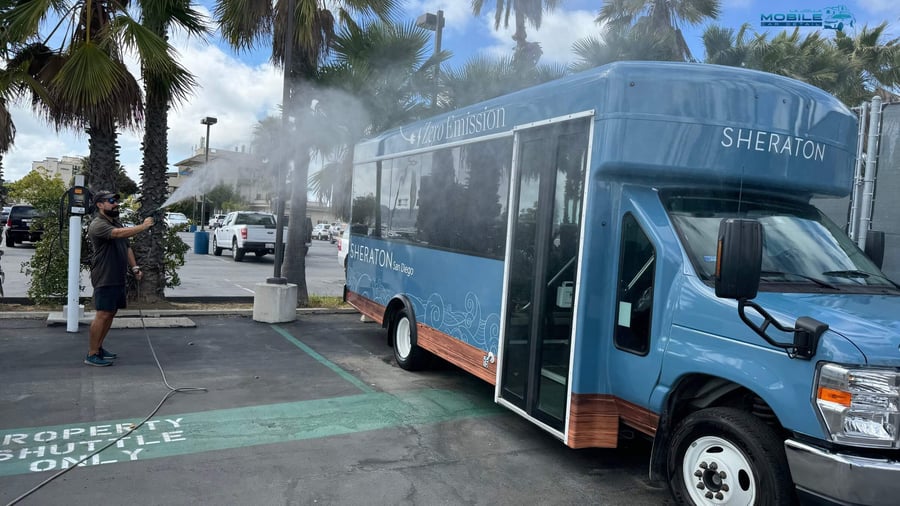 Truck detailing in action - hotel shuttle
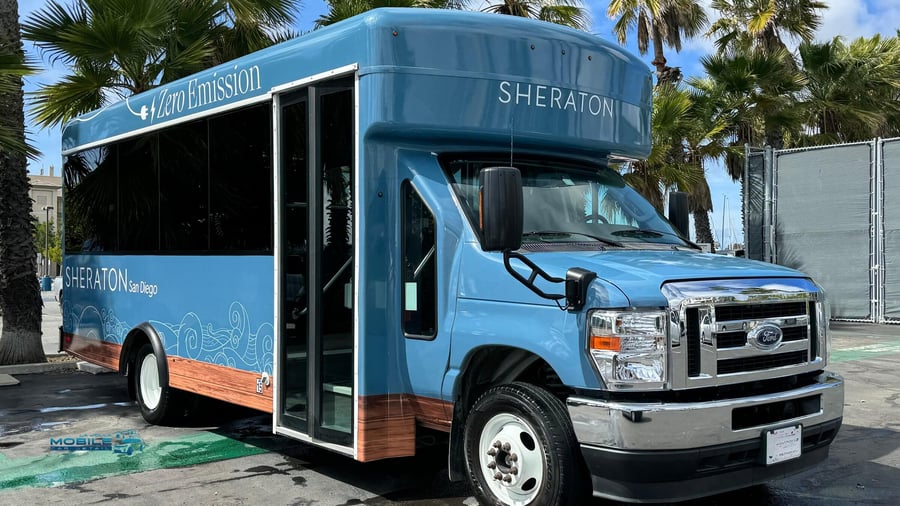 Truck detailing results - hotel shuttle
Truck detailing is physically harder than washing a car. The hood is higher. The roof is out of reach. For tall commercial vehicles like shuttles and box trucks, the roof becomes a catch-all for bird droppings and pollen that bakes on in the sun.
Safe Cleaning TO-DOs for Hard-to-Reach Areas
Use an extension pole with a soft bristle brush or microfiber mitt for roof and upper panels. A sturdy step stool or ladder is essential. Work from the side rather than leaning over from the front, which puts you off-balance and makes it harder to control pressure. Keep everything wet, rinse sections as you go, and never work on a hot surface.
Real World Example: Sheraton San Diego's Shuttle Fleet
Take the Sheraton San Diego's shuttle fleet. Every two weeks, their detailer shows up with a ladder and climbs up to inspect the roof. Without fail, there's a fresh collection of seagull presents waiting up there. Anyone who's spent time near the San Diego waterfront knows the seagulls don't discriminate between tourists eating fish tacos and hotel shuttles parked in the sun. The detailer removes each dropping carefully before it has time to etch into the clear coat. It's not glamorous work, but it's the difference between a shuttle that looks professional and one that looks neglected from every hotel room window above the third floor.
If you can't comfortably reach something, stop and reposition. Use the right tool or move your step stool. Stretching and straining leads to pressing too hard in some spots and missing others entirely, plus it's how people get hurt.
Interior Detailing: Built for Ruggedness, Cleaned for Comfort
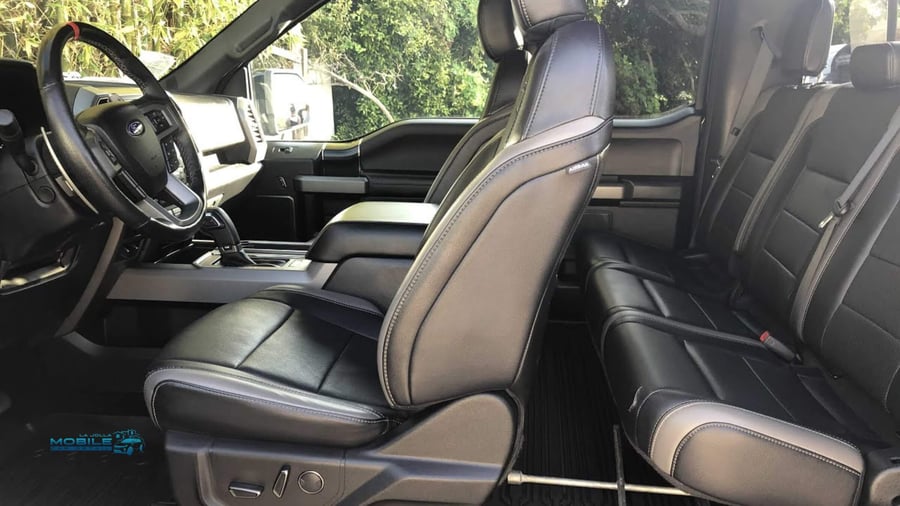 Interior view of a Ford truck showing spotless black leather seats and a dust-free cabin after expert truck detailing
Truck interiors are designed to take abuse, but that doesn't mean they're maintenance free. Work trucks accumulate grease and coffee stains. Off-road trucks bring half the trail back. Even daily drivers get dirty faster because door openings are lower, tracking in more debris.
The Sand Struggle: San Diego's Permanent Souvenir
Beach sand is basically tiny rocks. It gets everywhere in trucks, and heavy duty floor mats with deep grooves trap it worse than car mats.
You know that feeling when you vacuum your truck three times and still find sand? That's because home vacuums don't have the suction to pull sand from textured rubber. You're just rearranging it.
Sand is worse in trucks because floor mats have deeper texture than car mats. There's more space between and under seats. Crew cab trucks have back seats where sand hides for months. The tailgate area collects sand when surfboards lean against it.
Professional truck detailing uses commercial grade vacuums with attachments designed for textured surfaces. These actually lift sand instead of pushing it around. They also use compressed air to blow sand out of seat tracks, vents, and crevices where home vacuums can't reach.
DIY tip: Take floor mats out and beat them against a wall. Seriously. It sounds old school because it is, but it works better than vacuuming alone. Then vacuum outside before putting them back in.
Treating Work-Stained Fabric and Stiff Leather
Work trucks get dirty in ways regular vehicles don't. Grease from tools. Mud from job sites. Coffee spilled during morning commutes. Sawdust that works into every crevice. Oil stains from equipment.
Fabric seats absorb all of this. Unlike leather you can wipe, fabric holds stains and odors.
Hot water extraction is the only way to actually remove embedded grime. It injects heated cleaning solution into fabric, breaks down oils and dirt chemically, immediately extracts solution with dissolved grime, and pulls out what's embedded rather than just surface dirt. Leaves fabric damp, not soaked. Dries in 2 to 4 hours.
For deep set grease stains, professional degreasers break down oils that regular upholstery cleaners can't touch.
Leather in San Diego trucks:
Dries out from heat exposure. Cracks without regular conditioning. Needs UV protection more than cars because trucks spend more time outside. Should feel soft after conditioning, not greasy.
Those wipes from the auto parts store? They make seats shiny for a day, then accelerate drying. Real leather care uses pH balanced cleaners and conditioners that penetrate the hide.
Odor Elimination: Why Air Fresheners Fail
Air fresheners mask smells. They don't remove them.
The odor source is still there, you're just covering it with artificial fragrance. It's like spraying Febreze on a gym bag instead of washing it.
Professional odor removal methods:
• Ozone generators: Break down odor molecules chemically (requires empty vehicle, harmful to breathe during treatment)
• Enzyme treatments: Digest organic matter causing smells (spilled milk, pet accidents)
• Steam cleaning: Kills bacteria creating odors at high temperature
• Activated charcoal: Absorbs smells from ventilation system
If your truck smells and normal cleaning hasn't fixed it, the odor source is embedded in fabric or carpet. Surface cleaning won't solve it. You need extraction or professional treatment.
The Economics of Truck Ownership: Resale Value
Trucks hold value better than almost any other vehicle category.
According to iSeeCars 2025 analysis, pickup trucks retain more value than SUVs or sedans, with some models keeping over 70% of their original price after five years.
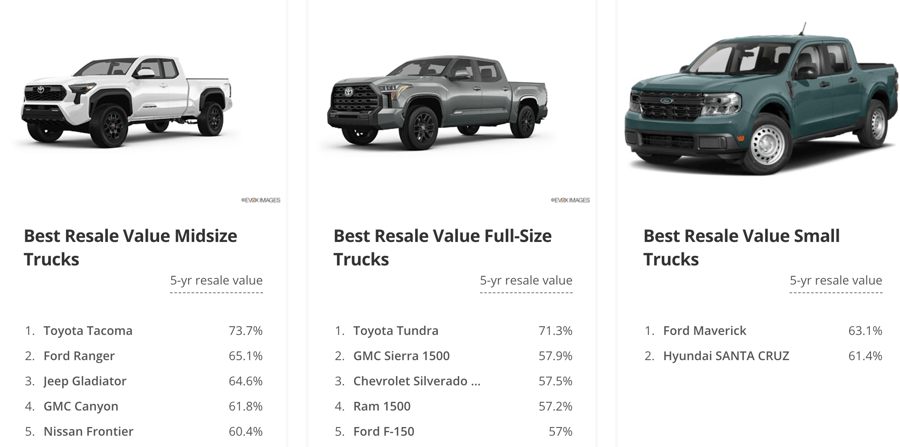 truck models with highest resale value over time - regular truck detailing increasing value
Source image available at: https://www.iseecars.com/resale-value/trucks
High demand for used trucks drives this. People need them for work and recreation. Trucks are built to last. One vehicle serves multiple purposes. And there's limited supply of well maintained examples.
The Toyota Tacoma Effect
The Tacoma is legendary for holding value. According to the same iSeeCars data, the Tacoma retains 73.7% of its value after five years. That's exceptional.
A $40,000 Tacoma is worth nearly $30,000 five years later if properly maintained.
Why the Tacoma dominates: bulletproof reliability reputation, off-road capability, manual transmission still available (only truck in US with one now), controlled production with no heavy fleet sales, and minimal dealer incentives.
Retained Value After 5 Years: Top Trucks
| Truck Model | 5-Year Retained Value | What This Means |
|---|---|---|
| Toyota Tacoma | 73.7% | A $40K truck is worth $29,480 after 5 years |
| Toyota Tundra | 71.3% | A $50K truck is worth $35,650 after 5 years |
| Ram 3500 | 76.6% | Heavy duty trucks hold value even better |
| Ford F-350 | 73.1% | Work trucks with towing keep value |
| Ford F-150 | 56.6% | High volume hurts resale despite popularity |
Source: iSeeCars Best Resale Value Trucks 2025
Where Proper Detailing Pays Off
When you're ready to sell or trade, buyers look for clean paint without oxidation, interiors without stains or tears, truck beds without rust, undercarriages showing minimal corrosion, and service records proving maintenance.
The difference between a maintained truck and a neglected one? $5,000 to $10,000 depending on model. Buyers in Clairemont and University City pay premium prices for trucks showing care. They walk away from ones that don't.
Why Professional Mobile Truck Detailing Works in San Diego
Most automatic car washes can't accommodate trucks properly. Brushes don't reach high enough for lifted vehicles. Width clearance too tight for trucks with aftermarket wheels. Can't clean truck beds. Damage bed liners, tow hitches, and oversized mirrors. Miss undercarriage completely.
Professional mobile truck detailing brings equipment to you in Torrey Pines, Point Loma, or anywhere across the county.
Truck Detailing vs. At-Home Washing: How Much Water Is Really Used?
Most people underestimate how much water goes into washing a truck at home. Leaving a hose running, even with good intentions, adds up fast.
According to Acentium Capital, washing a vehicle at home with a standard garden hose can use 100 gallons of water or more in a single wash. That water typically runs off driveways and into storm drains without being filtered or reused.
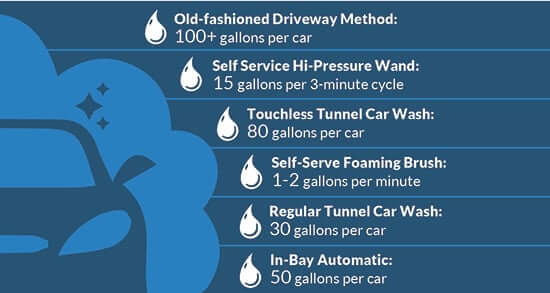 Water use between truck detailing methods and traditional home or drive-through washing
Source: https://ascentiumcapital.com/blog/detailing-being-green-so-your-commercial-car-wash-shines
Professional truck detailing is usually far more water-efficient. Data on commercial vehicle washing shows that professional wash and detailing systems average around 38 gallons of water per vehicle, with many operations using even less when water-reclamation systems or low-moisture techniques are involved.
Source: https://en.wikipedia.org/wiki/Nonresidential_water_use_in_the_U.S.
Many professional detailers further reduce water use by relying on:
High-efficiency pressure washers
Foam pre-soaks that shorten rinse time
Rinseless or low-moisture wash methods
The result is a cleaner truck with significantly less water than a typical driveway wash.
For San Diego truck owners who have lived through drought restrictions and water-use warnings, the difference matters. Choosing professional truck detailing over at-home washing can save dozens of gallons each time, without sacrificing results.
Cermatic Coating: UV Protection for Trucks
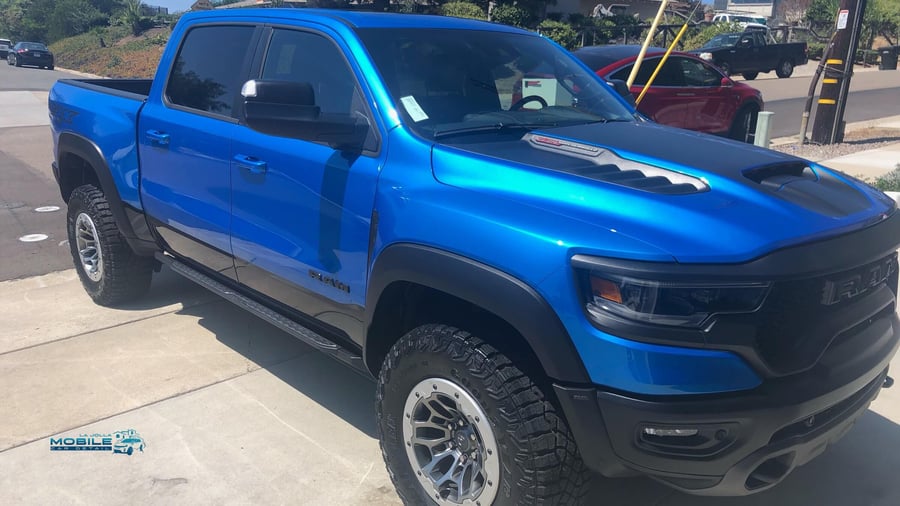 Dodge Ram after ceramic coating and truck detailing in San Diego
Trucks spend more time outside than cars. Work trucks sit on job sites all day. Off-road trucks park at trailheads. Even daily drivers are less likely to have garage parking.
UV protection matters more for trucks. Ceramic coating creates a barrier that blocks UV rays, prevents clear coat oxidation (that chalky faded look on roofs), makes washing easier (dirt doesn't bond as well), lasts 2 to 5 years depending on quality, and protects resale value.
That oxidized roof look common on Southern California trucks? That's clear coat failure from UV exposure. Ceramic coating prevents it.
Your Truck Is an Asset, Not Just a Tool
A clean truck performs better, smells better, and pays you back when it's time to trade in.
Whether you're in Del Mar, Encinitas, or Bird Rock, proper maintenance isn't optional if you want to maximize your truck's lifespan and value.
Trucks cost more upfront than cars, but hold value better when maintained. The work you put in today directly affects what you get back tomorrow. Treat your truck right, and it'll take care of you for years.
FAQs
How often should I detail my truck in San Diego?
For work trucks or vehicles exposed to harsh conditions, detail every 3 to 4 months. Daily drivers or garage kept trucks can go 4 to 6 months. If you're near the coast, towing regularly, or using your truck for work, quarterly service is recommended.
What's the best way to clean a spray-in bed liner?
Use a stiff bristle brush with degreaser made for bed liners. Scrub in circles to work cleaner into texture, let sit 3 to 5 minutes, then rinse with high pressure. Regular soap won't remove embedded grime from textured surfaces.
Does mobile truck detailing cost more than car detailing?
Yes, typically 20 to 30% more due to size, height, and additional cleaning required for truck beds and undercarriages. Check our pricing packages for specific rates based on your truck.
How do I prevent rust in my truck bed?
For drop-in liners, remove them twice yearly and clean underneath. Dry everything completely before reinstalling. For painted beds, keep them waxed. For spray-in liners, ensure no chips or damage expose bare metal.
Is ceramic coating worth it for trucks?
If you're keeping your truck long term or want to maximize resale value, yes. Ceramic coating provides 2 to 5 years of UV protection, prevents oxidation, and makes cleaning easier. Especially valuable for trucks spending most time outdoors.
Can I take my lifted truck through a regular car wash?
You'll want to check the clearance every single time, there are horror stories and videos online of optimistic drivers that decimated their local automated wash.